Byron Bay Whale Watching
Tours & tickets

Hand-picked by our editors — only the best 5 whale watching experiences from 18 reviewed.

Open today 08:00 – 18:00
Attendance: Moderate — winter migration
Ocean conditions are currently clear and favorable for marine tours today.
Free cancellation Instant confirmation Mobile voucher Verified partner Skip-the-line
Tickets

Choose your ticket

Verified partners for every tour, free cancellation where available, and instant confirmation on every booking.

Byron Bay Whale Watching Safari 3 hr
Standard Entry

Byron Bay Whale Watching Safari

4.8 (58)
€79
per person
Instant Mobile voucher Flexible — change up to 24h

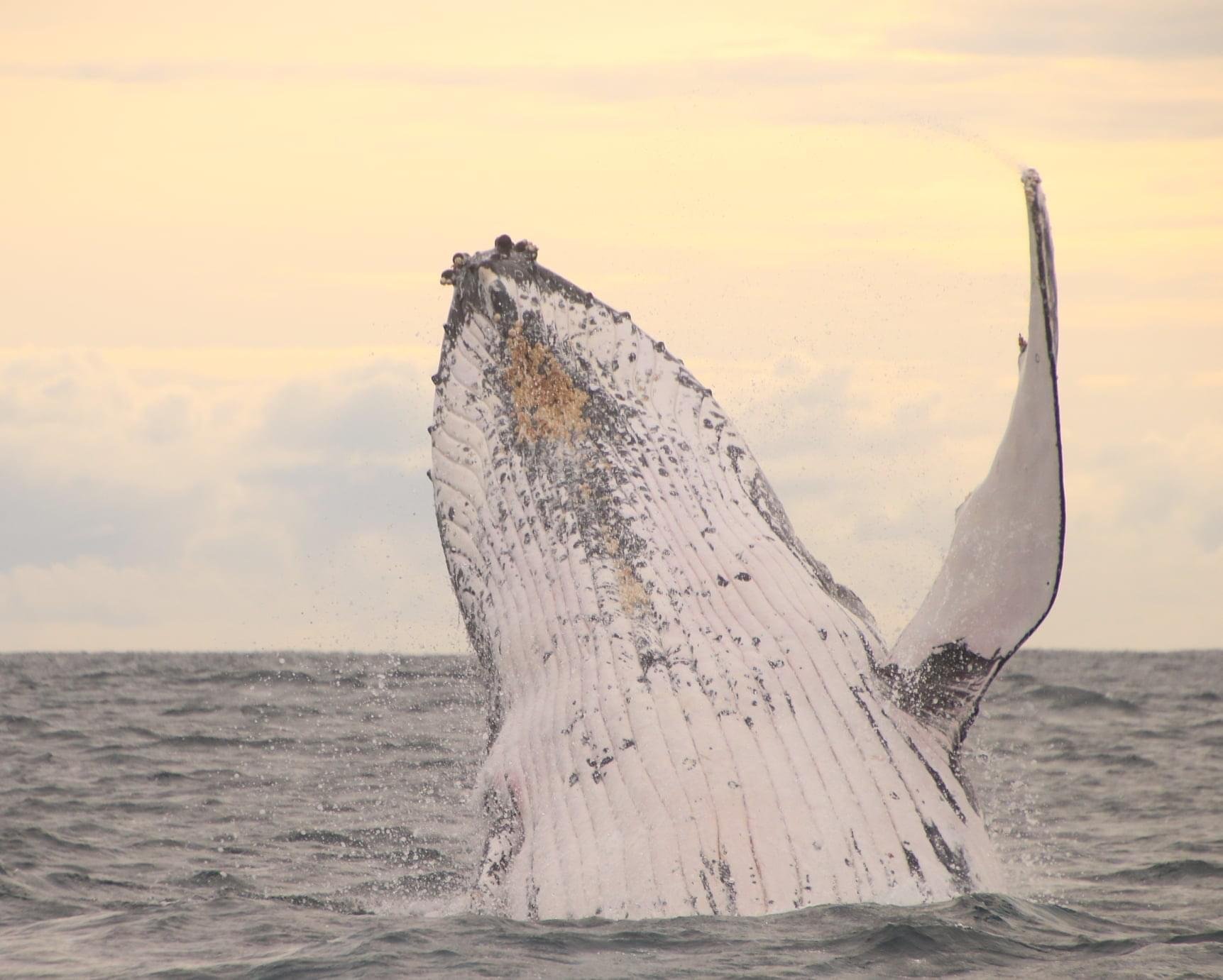
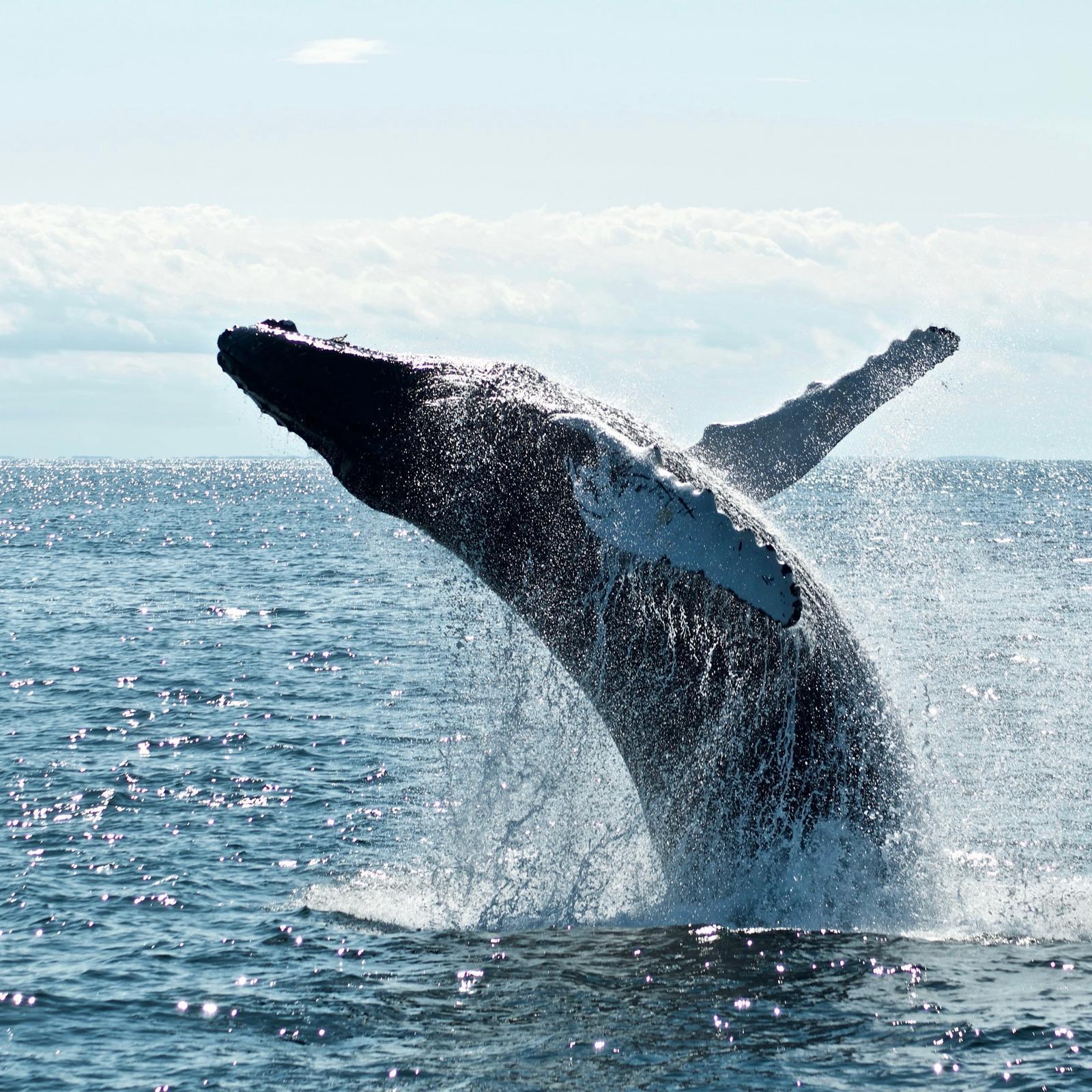
Spot migrating humpback whales breaching and playing in the waters off Byron Bay's stunning coastline.

Reserve
Byron Bay Whale Watching Expedition 3 hr
Standard Entry

Byron Bay Whale Watching Expedition

4.9 (16)
€85
per person
Instant Mobile voucher Flexible — change up to 24h

Beach-launched marine adventure with scientist guides tracking humpback migration through Cape Byron waters

Reserve

Prices from verified partners. Availability updates in real time at checkout. Free cancellation policies apply where shown.

What you'll do

Inside a tour, step by step

  1. 01 15m

    Check-in at Byron Plaza

    Arrive at the shop on Jonson Street to sign in, receive a brief safety orientation, and meet your marine scientist guide.

  2. 02 10m

    Transfer to The Pass

    Board the shuttle van for a short ride to the launch site at The Pass beach.

  3. 03 15m

    Beach Launch

    Wade into the water up to your knees and step onto the rigid inflatable boat.

  4. 04 1h 45m

    Ocean Cruise and Whale Spotting

    Search for migrating humpback whales in Cape Byron Marine Park, use the hydrophone to hear their songs, and learn about marine ecology.

  5. 05 15m

    Return to Byron Plaza

    Disembark back at the beach and take the shuttle van return to the main shop.

Highlights

What you'll see inside the attraction

The landmarks, rooms, and views travelers on this tour remember — all visible on a single visit.

Rigid Inflatable Eco-Vessel

This custom-built boat features a 360-degree view layout and holds a maximum of 8 passengers to ensure an intimate marine experience. Its specialized hull design minimizes noise and vibration, allowing close encounters without disturbing migrating whales.

Underwater Hydrophone System

The vessel is equipped with a specialized marine microphone that is lowered into the water when the engines are cut. This system amplifies and broadcasts the vocalizations of male humpbacks from up to several kilometers away.

The Pass Beach Launch Site

This shoreline serves as the departure point where the vessel launches directly from the wet sand into the surf. Passengers wade up to their knees in the water to board, experiencing a traditional style of coastal seafaring.

Cape Byron Marine Park Waters

The cruise navigates this 22,000-hectare marine sanctuary, which protects a diverse range of habitats. Over 30,000 humpback whales traverse these waters annually during their migration between Antarctica and the tropics.

Onboard Research Station

Led by qualified marine scientists, this education focus provides guests with real-time migration data collected during the journey. Guides use hydrophones and anatomical models to explain the species' unique winter calving behaviors.

Head to head

Byron Bay Whale Watching Cruise vs Sea Kayaking: Which Ocean Adventure Is Right for You?

The byron bay whale watching cruise is superior for passengers prioritizing comfort and wide-ranging sightings, whereas sea kayaking provides a more intimate encounter with coastal marine life. Most visitors who choose a byron bay whale watching cruise tour find the vessel stability preferable to the physical demands of paddling.

Feature Top pick Whale Watching Cruise Sea Kayak Adventure
Departure Point
Main Beach
Physical Effort
High
Whale Proximity
Close but cautious
Duration
3 hours
Wildlife Seen
Turtles and dolphins
Weather Dependability
Low stability

Verdict: Select your byron bay whale watching cruise tickets for a relaxed, high-vantage experience, or choose kayaking if you prefer active immersion in the local marine sanctuary.

How your ticket works

Book your ticket in 3 steps

  1. 01

    Book online

    Choose your ticket, select your date, and reserve in under two minutes. Secure checkout handled by our verified partner.

  2. 02

    Receive your mobile voucher

    Instant confirmation by email, with a mobile voucher you can save offline. No printing, no queuing at a collection desk.

  3. 03

    Show & enter

    Arrive at the entrance, show your voucher on your phone, and walk in. Most tickets include priority or skip-the-line access.

Plan your visit

Everything you need to know before you go

Practical details for your visit straight from our verified partners — hours, access, rules, and how to get there.

Open today · 08:00 – 18:00
Hours
08:00–18:00 daily
Address
Byron Plaza, 5/90-96 Jonson Street, Byron Bay, NSW 2481, Australia
Physical Access
Beach wading up to the knees required to board
Peak Window
08:30–14:00 for the best sea conditions on a Byron Bay whale watching cruise
Baggage
No large bags allowed on the boat
Mon
08:00 – 18:00
Tue
08:00 – 18:00
Wed
08:00 – 18:00
Thu
08:00 – 18:00
Fri
08:00 – 18:00
Sat
08:00 – 18:00
Sun
08:00 – 18:00
Main entrance

Turtle School Byron Plaza

Byron Plaza, 5/90-96 Jonson Street, Byron Bay, NSW 2481, Australia

Meet at the shop inside Byron Plaza 15 minutes before your scheduled departure time for safety briefing and gear check.

Address
Byron Plaza, 5/90-96 Jonson Street, Byron Bay, NSW 2481, Australia
Baggage
No large bags allowed on the boat

How to get there

🚗
Car · 10m · 4 AUD per hour

Drive to Byron Plaza on Jonson Street, where municipal paid parking is available behind the plaza or along nearby streets.

🚶
Walk · 5m · Free

From Main Beach or the town center, Byron Plaza is situated directly on Jonson Street, making it easily accessible on foot.

🚆
Public transport · 3m · 3 AUD

Take bus routes 640 or 660, which stop at the Byron Bay Interchange on Jonson Street, just a short walk from the office.

Dress code

You must wear clothing that can get wet up to your knees, such as shorts, rolled-up trousers, or swimsuits, as you will wade into the ocean to board. A windproof jacket is highly recommended to stay warm on your Byron Bay whale watching cruise, and flat, slip-resistant shoes are required.

Bags & security

Only small personal items and dry bags are permitted on board the vessel due to limited storage space. Large backpacks, suitcases, and non-waterproof bags should be left at the office or your accommodation.

Photography

Cameras are welcome on the Byron Bay whale watching cruise, but you must bring a waterproof bag or strap to protect your equipment. There are no charging outlets on the vessel, so ensure your batteries are fully charged before boarding.

Accessibility

This Byron Bay whale watching cruise tour is not wheelchair accessible and is unsuitable for individuals with mobility challenges. Participants must be able to wade through ocean water and step onto the boat from the beach at The Pass.

Mobile phones

Mobile phones are permitted but should be secured with a wrist strap or lanyard to prevent them from dropping into the ocean. Keep your device in a waterproof case to protect it from sudden sea spray.

What to bring

  • Shorts or roll-up pants
  • Towel
  • Reef-safe sunscreen
  • Windproof jacket
  • Water bottle
  • Proof of ID

Not allowed

  • Suitcases
  • Large backpacks
  • Single-use plastic bags
  • Alcoholic beverages
  • Hot food
  • Drones
  • Tripods
  • Non-waterproof electronic cases
  • Pets

Families & strollers

A Byron Bay whale watching cruise is suitable for families, though children must be at least 5 years old to board. Parents must supervise minors at all times, and child-sized life jackets will be provided before boarding.

Food & drink

Complimentary water is provided on the boat during the trip. You may bring your own small water bottle, but large snacks and hot drinks are prohibited to prevent spills and safety hazards on the water.

Pets

No pets of any kind, including service animals, are permitted on the vessel due to safety regulations and marine park conservation guidelines.

Good to know

If you are prone to seasickness, it is recommended to take motion sickness medication before arriving, as the crew cannot distribute it. A Byron Bay whale watching cruise operates in open ocean waters, and schedules may change based on weather forecasts.

Meeting point

Where to find us

Turtle School Byron Plaza

Byron Plaza, 5/90-96 Jonson Street, Byron Bay, NSW 2481, Australia

Meet at the shop inside Byron Plaza 15 minutes before your scheduled departure time for safety briefing and gear check.

Get directions
Around your visit

Everything else worth knowing

Best time to go, insider tips, nearby landmarks, and the cancellation fine print — flip through to skim what matters to you.

Best time to visit

How crowds, weather, and events shift across the year.

June to August

This winter period is the peak northern migration where whales are highly active, and morning tours offer the calmest sea state with winds averaging under 15 knots.

September to October

During the southern migration, mothers travel slowly with newborn calves close to the coast, providing excellent close-range viewing opportunities.

November

This marks the tail end of the season when the last migrating pods journey back to Antarctica before tours pause until the following winter.

July

Mid-winter brings cool, crisp weather with temperatures between 12 and 20 degrees Celsius, ideal for seeing active breaching and tail slapping on a whale watching tour in Byron Bay.

Helpful tips for your visit

Small details that turn a good visit into a great one.

Book early in your holiday

Reserve your tour at the start of your stay to allow flexibility for rescheduling if the captain cancels due to rough sea conditions.

Wear easily rolled clothing

Expect to wade through water up to your knees during the beach launch at The Pass, so avoid long jeans or tight pants.

Take seasickness protection

The open ocean around Cape Byron can feature rolling swells, so consume motion sickness prevention before boarding if susceptible.

Dress in layers

Even on warm sunny days, the wind chill on an open boat moving at speed can feel cold, making a windproof jacket essential.

Keep camera gear secure

Use wrist straps or neck cords for all electronics, as there are no barriers to prevent items from falling overboard into the marine park.

Nearby landmarks

Non-bookable sights within a short walk — free to visit, easy to pair.

Cape Byron Lighthouse

10m drive

This historic lighthouse sits on the easternmost point of Australia, offering panoramic ocean views and land-based spotting sites during migration.

The Pass

5m drive

A beach and surf break where the tour boat launches directly from the sand.

Julian Rocks Marine Sanctuary

15m boat ride

An offshore volcanic formation that acts as a haven for turtles, rays, and over 500 species of fish.

Arakwal National Park

5m drive

A coastal conservation area protecting local clay heath land and traditional Aboriginal country.

Main Beach

5m walk

A popular beach in Byron Bay offering wide coastal vistas and walking paths.

Cancellation policy

Flexible, no hidden fees.

Cancellations must be made at least 24 hours prior to departure to receive a full refund on your Byron Bay whale watching cruise. The 129 AUD standard ticket will not be refunded for late cancellations or no-shows.

Where to stay

Hotels & districts near the attraction

Hand-picked options within walking distance — pick a district for vibe, or a specific hotel for convenience.

The Sebel Byron Bay

5m walk
mid-range

Centrally located apartments on Lawson Street near the main beach and Jonson Street shops.

Elements of Byron

10m drive
luxury

A beachfront resort located on Belongil Beach featuring private villas and eco-trails.

Byron Bay YHA

3m walk
budget

A hostel on Carlyle Street offering shared and private rooms close to the transit center.

About

The place, in context

Each winter, more than 35,000 humpback whales navigate the narrow corridor between Cape Byron and the continental shelf, making Byron Bay one of the Southern Hemisphere's most reliable cetacean migration routes. The headland marks Australia's easternmost point, where the shelf drops from 40 metres to 4,000 metres within two nautical miles. That abrupt bathymetry funnels northbound whales into a passage less than five kilometres wide, visible from the surface between late May and early November. Commercial whale watching began here in 1987, when a single operator ran weekend trips from the town jetty. By 2010, the NSW National Parks and Wildlife Service had issued permits to seven vessels, each required to maintain 100-metre minimum distances and limit engine noise during close encounters. The regulations followed a 2006 incident in which a pod of three humpbacks circled a stationary boat for 22 minutes, an interaction marine biologists later cited as evidence of the species' growing habituation to human observation. Today, byron bay whale watching cruise operators carry hydrophones, allowing passengers to hear the low-frequency calls males produce during competitive surface behaviour. The town's whale watching fleet includes purpose-built catamarans with 360-degree viewing decks and smaller rigid inflatables that sit lower to the waterline. Most vessels depart from the marina at Jonson Street, motoring north past Wategos Beach before turning offshore near the lighthouse. Peak sightings occur in July and August, when mothers and calves travel south at slower speeds than the northbound cohort. Breaching, tail slapping, and pectoral fin displays are most common in the morning, when wind speeds remain below 15 knots and surface visibility extends beyond 500 metres. Marine biologists aboard longer expeditions provide real-time species identification, distinguishing humpbacks from the occasional minke or southern right whale. Byron Bay whale watching tour operators also document sightings for the Southern Cross University Whale Research Centre, contributing to longitudinal studies on migration timing and calf survival rates. The 2025 season recorded 41,200 individual whale movements past Cape Byron, the highest count since systematic monitoring began in 2001. That data informs adaptive management policies, including seasonal speed restrictions for commercial shipping lanes and dynamic exclusion zones around nursing pairs.

"The continental shelf drops from 40 metres to 4,000 metres within two nautical miles of Cape Byron, funneling migrating humpbacks into a passage less than five kilometres wide."
Your experience

What a tour day looks like

A step-by-step walkthrough of the visit — what you'll see, how long each stage takes, and the details that matter.

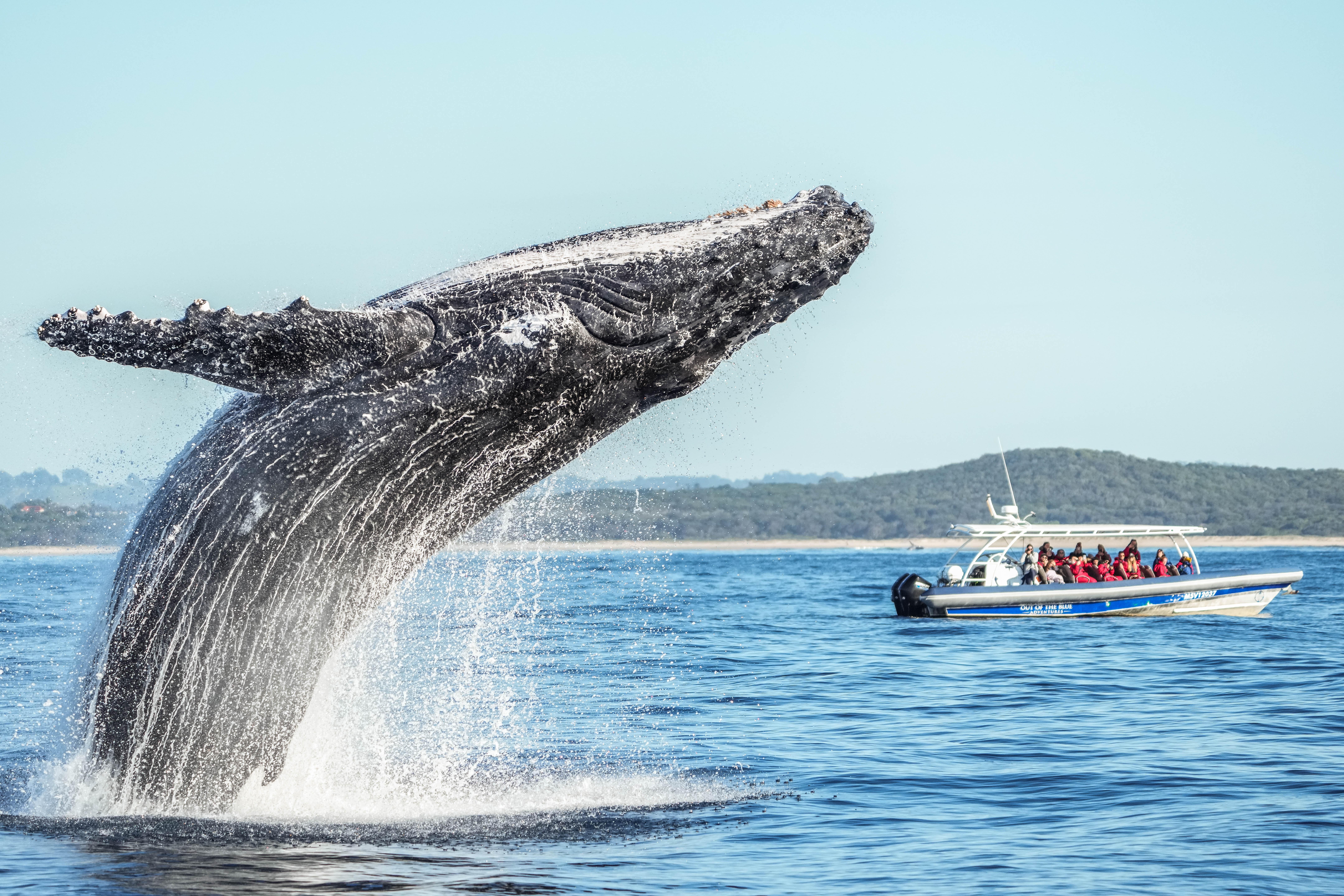
You board at Byron Plaza on Jonson Street thirty minutes before departure, collecting a mobile voucher and receiving a safety briefing on the dock. The catamaran clears the marina breakwater at eight knots, passing the surf break at The Pass before accelerating toward Cape Byron. Within fifteen minutes, the crew cuts the engines. A humpback surfaces 200 metres off the starboard bow, exhaling a vertical spout that hangs in the still air for three seconds before dissipating. The marine biologist aboard identifies the whale as a juvenile male, noting the single dorsal fin and arched back visible during the dive sequence. You watch the animal complete four surface intervals before it breaches, clearing the water at a 45-degree angle and crashing sideways in a column of white spray. The hydrophone speaker crackles with low groans and ascending whistles, vocalisations the biologist attributes to a second whale below the surface. The vessel drifts for twenty minutes while the pod circles, surfacing in intervals that grow shorter as the whales approach. At the closest pass, you count barnacle clusters on the leading edge of a pectoral fin. The captain restarts the engines only after the whales resume their southbound course, maintaining a parallel track for another ten minutes before turning back toward the headland. You return to the marina at midday, the full byron bay whale watching cruise tickets experience lasting three hours from departure to docking.

Frequently asked

Frequently asked questions about Byron Bay whale watching cruise tours

What are the office hours for the Byron Bay whale watching cruise tours?

The Byron Bay Whale Watching office is open from 08:00 to 18:00 daily for check-ins and inquiries.

Where does the Byron Bay whale watching cruise tour depart from?

All tours check in at the main Byron Bay Whale Watching office located at Byron Plaza, 5/90-96 Jonson Street, Byron Bay, NSW 2481, Australia.

How do I purchase Byron Bay whale watching cruise tickets?

Standard tickets cost 129 AUD and can be booked online via the official Byron Bay Whale Watching website.

What is the best arrival window for a Byron Bay whale watching cruise?

The best arrival window is between 08:30 and 14:00, which aligns with optimal daily departure times.

Does the Byron Bay whale watching cruise operate during rain?

Tours operate in most weather, but if conditions are unsafe, Byron Bay Whale Watching will reschedule your trip or offer a full refund.

Is the Byron Bay whale watching cruise safe for young children?

Children must be at least 5 years old to join, and Byron Bay Whale Watching requires all minors to be accompanied by an adult.

What clothing is recommended for a Byron Bay whale watching cruise?

Guests should wear shorts or roll-up pants and flat shoes, as Byron Bay Whale Watching boarding involves wading through shallow water.

Is this Byron Bay marine mammal cruise accessible for passengers with disabilities?

The vessel used by Byron Bay Whale Watching is not wheelchair accessible due to the physical requirements of beach boarding.

What happens if no humpbacks are spotted during the Cape Byron humpback safari?

If no whales are spotted, the operator provides a return voucher to try again during the same season.

Can I bring lunch on the ocean safari in Byron Bay?

You may bring a water bottle, but large meals are prohibited on board to ensure passenger safety.

Which landmarks are visible during the humpback whale tour?

The route passes Cape Byron Lighthouse and the waters near Julian Rocks Marine Sanctuary.